
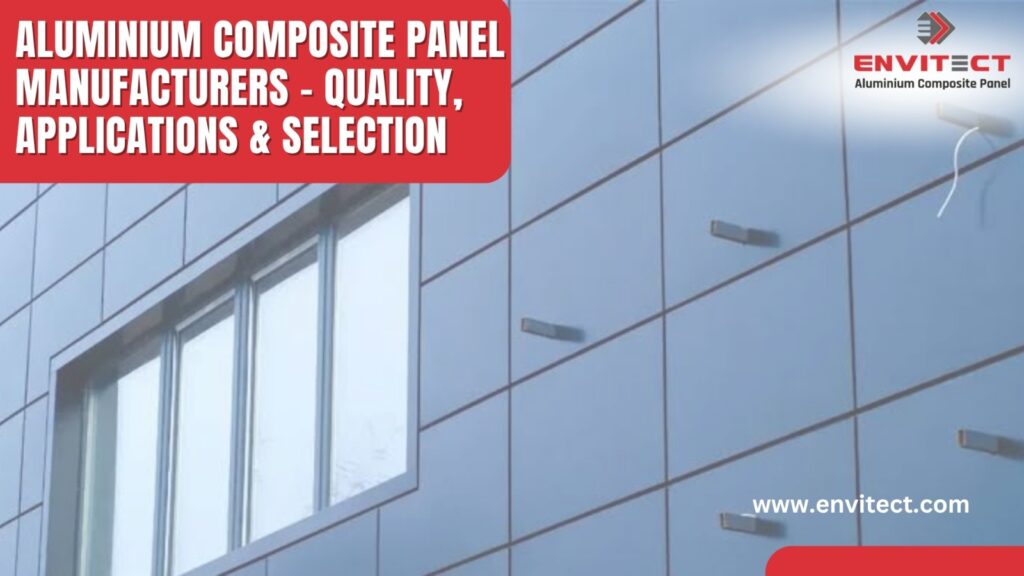
Aluminium composite panels, commonly called ACP panels, have become a popular material for modern architectural and construction projects. Their combination of lightweight construction, design flexibility, smooth surfaces, and multiple finish options makes them suitable for both exterior and interior applications.
For businesses searching for Aluminium Composite Panel Manufacturers, choosi ng a suitable manufacturer is important. Panel composition, aluminium thickness, coating, core material, surface finish, dimensional accuracy, and fire-performance requirements can all influence the suitability of an ACP for a particular project.
What Is an Aluminium Composite Panel?
An aluminium composite panel is generally a layered material consisting of aluminium sheets bonded to a central core.
The combination creates a panel that can offer:
- Lightweight construction
- A smooth and flat surface
- Design flexibility
- Easy fabrication
- Multiple colour options
- Different surface textures
- Suitability for various architectural applications
The exact construction and performance of an ACP depend on its specifications and manufacturing process.
How Are Aluminium Composite Panels Manufactured?
Manufacturing quality can influence the appearance, strength, durability, and consistency of ACP panels.
A simplified manufacturing process can include:
1. Aluminium Coil Preparation
Aluminium material is prepared according to the required panel specifications.
2. Surface Treatment
The aluminium surface may undergo treatment to improve coating adhesion and surface performance.
3. Coating
The aluminium surface can be coated to provide the desired colour, finish, and level of surface protection.
4. Core Preparation
The appropriate core material is prepared according to the intended panel specification.
5. Lamination
The aluminium layers and core are bonded together under controlled manufacturing conditions.
6. Cooling and Stabilisation
The laminated panel is cooled and stabilised before further processing.
7. Cutting
Panels are cut to the required dimensions.
8. Quality Inspection
Finished panels can be inspected for dimensions, surface appearance, colour consistency, flatness, and other agreed specifications.
9. Packaging
The completed panels are appropriately packaged for storage and transportation.
The exact process varies between manufacturers and product categories.
Types of Aluminium Composite Panels
Different projects require different panel specifications.
Standard ACP Panels
Standard panels can be suitable for selected interior applications, signage, partitions, and other projects where the required technical specifications are met.
Fire-Retardant ACP Panels
Fire-retardant panels are designed with core materials intended to provide improved fire performance compared with certain standard polymer-core panels.
For building façades and other regulated applications, buyers should verify the relevant fire classification and applicable building-code requirements.
Specialised ACP Panels
Some manufacturers offer panels designed for specific architectural requirements, including particular finishes, thicknesses, dimensions, or performance characteristics.
Popular ACP Surface Finishes
One of the major advantages of ACP is the variety of visual finishes available.
Solid Colours
Solid-colour ACP panels can provide a clean and uniform appearance for commercial and residential buildings.
Metallic Finishes
Metallic surfaces can create a contemporary appearance and are often used in modern architectural designs.
Matte Finishes
Matte surfaces can provide a softer appearance while reducing strong surface reflections.
Gloss Finishes
Gloss finishes can create a brighter and more reflective appearance.
Wood Finish
Wood-look ACP panels can provide a decorative appearance while retaining the characteristics of a composite panel.
Stone Finish
Stone-inspired finishes can be used to create a distinctive architectural appearance.
Brushed Finish
Brushed-metal effects can be suitable for contemporary interiors, signage, and façade applications.
The availability of colours and textures depends on the manufacturer.
Benefits of Aluminium Composite Panels
Lightweight Construction
ACP panels can provide a relatively lightweight cladding solution compared with some traditional façade materials.
Their weight can simplify handling and fabrication when properly designed and installed.
Design Flexibility
ACP panels are available in various colours, textures, and finishes.
This allows architects and designers to create different visual effects without changing the basic panel system.
Easy Fabrication
ACP can generally be cut, routed, folded, and fabricated using suitable tools and techniques.
This makes it adaptable to different architectural designs.
Modern Appearance
The smooth surface of ACP can create a clean and contemporary appearance for commercial buildings, offices, retail spaces, and other structures.
Versatile Applications
Depending on the product specification, ACP can be used for:
- Exterior façades
- Interior walls
- Signboards
- Column cladding
- Partitions
- Commercial interiors
- Retail spaces
- Corporate buildings
How to Choose Aluminium Composite Panel Manufacturers
Selecting the right manufacturer can affect the overall project outcome.
Product Range
Check whether the manufacturer offers the required:
- Thickness
- Core type
- Colour
- Finish
- Panel dimensions
Manufacturing Capability
Consider the manufacturer’s ability to produce consistent panels according to agreed specifications.
Quality Control
Ask about inspection and quality-control procedures during production.
Technical Support
Technical assistance can be useful when selecting products for specific applications.
Supply Capacity
Large construction projects may require substantial quantities, so supply capability and delivery planning should be discussed in advance.
Documentation
Request relevant product information, technical data, and test documentation when required.
Latest Considerations When Selecting ACP Panels
Focus on Fire Performance
Fire performance is an increasingly important consideration for building façade projects.
Buyers should verify the panel’s:
- Core composition
- Fire classification
- Test reports
- Applicable standards
- Intended application
The required specification can differ according to building type, height, location, and local regulations.
Greater Demand for Design Options
Architects and designers often require materials that support distinctive building designs.
ACP manufacturers may offer:
- Metallic colours
- Matte finishes
- Gloss finishes
- Wood textures
- Stone effects
- Brushed finishes
- Custom colours
The availability of particular finishes depends on the manufacturer.
Project-Specific Material Selection
There is no single ACP specification suitable for every project.
A panel selected for an indoor decorative wall may have different requirements from a panel intended for an exterior façade.
Therefore, buyers should communicate the intended application to the manufacturer before selecting a product.
Aluminium Composite Panels for Different Projects
Commercial Buildings
ACP panels can be used for commercial façades, entrance areas, signage, and interior design elements.
Retail Stores
Retail businesses can use ACP for storefronts, signage, decorative walls, and branding elements.
Corporate Offices
ACP can contribute to modern exterior façades and interior feature walls.
Residential Buildings
Depending on the product specification, ACP can be used for selected exterior and interior architectural elements.
Industrial Buildings
ACP can be considered for suitable architectural cladding and visual design applications.
Signage
ACP’s flat surface and fabrication flexibility make it useful for many signboard and display applications.
Environmental and Maintenance Considerations
When selecting ACP, buyers can also consider the expected maintenance requirements and environmental exposure.
For exterior applications, factors such as:
- Sun exposure
- Rain
- Humidity
- Temperature changes
- Dust
- Pollution
can influence material selection and maintenance planning.
The coating and product specification should be appropriate for the intended environment.
Looking for Aluminium Composite Panel Manufacturers?
Planning a commercial, residential, façade, interior, or signage project?
Discuss your ACP panel requirements, preferred finish, specifications, quantity, and application with envitect.
Contact envitect to Explore ACP Panel Solutions
Conclusion
Aluminium composite panels have become a versatile material for modern architectural and construction applications. Their lightweight structure, range of finishes, fabrication flexibility, and contemporary appearance make them suitable for many projects. However, choosing among Aluminium Composite Panel Manufacturers should involve more than comparing prices. Buyers should carefully evaluate panel construction, core material, aluminium thickness, coating, surface finish, fire performance, quality control, technical documentation, and supply capability.
For businesses exploring ACP solutions, envitect can be considered when discussing product specifications, finishes, quantities, and project requirements. The final product should always be selected according to its intended application, verified technical specifications, and applicable building and safety requirements.